


SC-Manager Webshop - Procurement Software
With its procurement software, the webshop, SC-Manager offers a central catalog platform with integration of external e-catalogs, your stock items and individual supplier catalogs.
Efficient procurement software for companies
In an increasingly networked and volatile global economy, efficient, transparent and strategically aligned purchasing is no longer an optional extra, but a decisive lever for corporate success. Manual, paper-based processes, a lack of transparency regarding expenditure and decentralized ordering processes are not only inefficient, but also entail considerable risks.
The solution lies in the consistent digitalization of procurement. Modern procurement software, also known as e-procurement solutions or procurement software, is the technological backbone for this change. It transforms procurement from a purely administrative function into a strategic value driver that makes a significant contribution to reducing costs, minimizing risk and boosting a company’s innovative strength.

What is e-procurement? Introduction to procurement software
E-procurement (electronic procurement) refers to the electronic support of procurement processes in a company. Procurement software is the central tool that enables this digital transformation. It is far more than just an ordering system; it is an integrated platform that digitally maps, automates and optimizes the entire procurement cycle – from demand to payment(source-to-pay).
Definition and benefits of procurement software
Procurement software is a specialized application that helps companies to digitize, standardize and automate their purchasing processes. It creates a central platform for all procurement-related activities in supply chain management, from requisitioning, approval and ordering to invoice verification. The primary benefit is the creation of transparency and control over all expenditure.
Every single step in the procurement process is documented in a traceable manner, which not only ensures compliance with internal guidelines, but also creates a sound basis for strategic decisions and negotiations with suppliers.
How procurement systems digitize purchasing
Procurement systems replace manual, error-prone and time-consuming processes with intelligent, automated workflows. Instead of sending purchase requisitions by email or on paper, employees create them directly in the system. Approval processes that used to take days are reduced to a few hours or minutes thanks to predefined, multi-stage workflows. Orders are automatically transmitted to suppliers and the entire process is tracked in the system, right through to goods receipt and invoicing.
This end-to-end digitalization not only significantly reduces the administrative workload, but also minimizes the risk of maverick buying (uncontrolled purchasing via official channels) and creates a uniform database for the entire company.
Implementation & integration of procurement software tools
The introduction of procurement software is a strategic project, the success of which depends largely on careful planning and implementation. It is not just about installing a new technology, but also about optimizing existing processes and taking employees along on the path of digital transformation. One of the biggest technical challenges and at the same time one of the most important success factors is the seamless integration of the new software into the existing IT system landscape.
Seamless ERP connection
A modern procurement tool can only develop its full potential if it communicates smoothly with the heart of the company’s IT, the ERP system (Enterprise Resource Planning). Deep integration, for example with SAP S/4HANA or other leading ERP solutions, is essential. It ensures that data such as supplier master data, orders, goods receipts and invoices are synchronized automatically and in real time between the systems. This avoids redundant data maintenance, prevents inconsistencies and creates a “single source of truth” for all procurement-relevant information. Without such a connection, the procurement software remains an isolated silo and the hoped-for efficiency gains are negated by manual data transfers.
Integration into existing merchandise management systems Purchasing
In addition to the ERP system, other specialized systems, such as an enterprise resource planning system (ERP) in purchasing, often need to be connected. Modern procurement solutions offer flexible and standardized interfaces (APIs) for this purpose, which enable problem-free integration. For example, stock levels from the ERP system can be displayed directly in the procurement software in order to avoid duplicate orders and ensure optimal inventory management.
Step-by-step introduction: Analysis → Pilot phase → Rollout
A “big bang” introduction, where the software goes live for all areas at the same time, is rarely advisable. A step-by-step approach has proven itself in practice and minimizes the risks.
| Phase | Phase Description | Goals |
|---|---|---|
| 1. analysis | Detailed recording and analysis of existing procurement processes. Identification of weak points and potential. Definition of the requirements for the new software. | Clear understanding of the initial situation, creation of a specification sheet, definition of measurable targets (KPIs). |
| 2. pilot phase | Implementation of the software in a limited, representative area (e.g. for a specific product group or department). | Testing the software under real conditions, collecting feedback from end users, validating the processes and the ERP connection. |
| 3. rollout | Gradual expansion of the software to other divisions or locations based on the findings from the pilot phase. | Comprehensive use of the software throughout the company, realization of efficiency gains and cost savings. |
Training and support for e-procurement solutions
Even the best software is useless if employees do not accept it or do not know how to use it. A comprehensive training concept that is tailored to the various user groups (requisitioners, approvers, strategic purchasing) is therefore essential. Regular training, comprehensible instructions and easily accessible support (first and second level) ensure that users fully exploit the potential of the e-procurement solution and actively support the digital transformation in procurement.
Advantages of procurement solutions for companies
The implementation of a modern procurement solution goes far beyond the mere digitalization of processes. It creates measurable added value that manifests itself in the form of increased efficiency, reduced costs, greater transparency and improved compliance throughout the entire company.
More efficient processes through procurement automation software
Perhaps the most immediate benefit is the massive increase in process efficiency. Procurement automation software relieves employees of time-consuming, repetitive routine tasks. Manual order approvals, typing order confirmations or comparing invoices with orders and goods receipts are replaced by automated workflows. This dramatically speeds up throughput times – a procurement process that used to take days can now be completed in just a few hours. The capacity freed up in this way can be used by purchasing staff for more strategically important tasks, such as optimizing the supplier portfolio or negotiating better conditions.
Central procurement platform software for all departments
A central procurement platform breaks down the data silos between departments. All employees, from the engineer in development who requests a new prototype to the controller who monitors spending, have access to the same, standardized database. This promotes cross-departmental collaboration and ensures that all decisions are based on the same, up-to-date information. The platform becomes the “single source of truth” for the entire purchasing department and creates a company-wide transparency that would be unattainable with decentralized, email-based processes.
Transparent cost control through procurement savings tracking software
“If you don’t measure, you can’t control.” This quote is particularly true for purchasing. Integrated procurement savings tracking software enables seamless and transparent monitoring of all expenditure and savings. Negotiated rebates, discounts and savings from framework agreements are systematically recorded and their actual realization (maverick buying control) is monitored. Dashboards and detailed reports provide management with a sound basis for controlling purchasing and proof of the value contribution that procurement makes to the company’s success at the touch of a button.
Scalability with cloud-native procurement software
Modern, cloud-native procurement software offers invaluable flexibility and scalability. It grows with the company. New locations, additional clients or additional users can be integrated into the platform without major technical effort and high upfront investments. This is a decisive advantage, especially for internationally growing companies. The cloud architecture also ensures that the software is always up to date and that all users worldwide have access to the same, up-to-date version.
Sustainable purchasing solutions through procurement management software
Sustainability and compliance with ESG criteria (environment, social, governance) are becoming increasingly important factors in procurement. Modern procurement management software supports companies in achieving their sustainability goals. It enables the systematic recording of suppliers’ sustainability certificates, the monitoring of CO2 emissions in the supply chain or the preferential selection of regional and environmentally friendly suppliers. This makes the procurement software an important tool for anchoring not only economic, but also ecological and social responsibility in purchasing.
Procurement process and workflow management
At the heart of any procurement software is the ability to map, control and automate complex workflows and procurement processes. Intelligent workflow management is the key to efficiency and compliance with company guidelines. It ensures that the right information reaches the right people at the right time and that decisions are made quickly and transparently.
Management of workflows with online procurement software and S2P processes
Modern online procurement software enables the flexible design of multi-stage approval workflows. These can be based on various criteria, such as the order value, the product group, the cost center or the requesting employee. A typical example: a purchase requisition under €500 is automatically approved, a requisition up to €5,000 goes to the head of department and anything above that requires additional approval from the management.
These rule-based workflows are crucial for mapping the entire source-to-pay (S2P) process. S2P procurement software covers the entire cycle from supplier search (sourcing) to contract management and operational ordering (procurement) through to invoice payment (pay) and ensures a smooth and controlled process through integrated workflows.
Overview of the entire procurement process with procurement process management software
Procurement process management software offers a 360-degree view of all ongoing procurement processes. Users can see the status of their request at any time, who the next approver is and when delivery can be expected. This transparency significantly reduces queries to the purchasing department and increases employee satisfaction. For management, detailed process analyses offer the opportunity to identify bottlenecks in the workflow and continuously optimize processes.
Optimize procurement processes and increase efficiency
The optimization of procurement processes is a continuous improvement process (CIP). The data collected by the software forms the basis for this. By analyzing throughput times, approval times or the number of manual interventions, weak points can be specifically identified. It may turn out that a certain approval step is superfluous or that the value limits for automatic approvals need to be adjusted. Good procurement software provides the necessary key figures to make these decisions based on data and sustainably increase efficiency in purchasing.
Procurement process and workflow management
At the heart of any procurement software is the ability to map, control and automate complex workflows and procurement processes. Intelligent workflow management is the key to efficiency and compliance with company guidelines. It ensures that the right information reaches the right people at the right time and that decisions are made quickly and transparently.
Managing workflows with online procurement software and S2P processes: Modern online procurement software enables the flexible design of multi-stage approval workflows. These can be based on various criteria, such as the order value, the product group, the cost center or the requesting employee. A typical example: a purchase requisition under €500 is automatically approved, a requisition up to €5,000 goes to the head of department and anything above that requires additional approval from the management.
These rule-based workflows are crucial for mapping the entire source-to-pay (S2P) process. S2P procurement software covers the entire cycle from supplier search (sourcing) to contract management and operational ordering (procurement) through to invoice payment (pay) and ensures a smooth and controlled process through integrated workflows.
Overview of the entire procurement process with procurement process management software: Procurement process management software offers a 360-degree view of all ongoing procurement processes. Users can see the status of their request at any time, who the next approver is and when delivery can be expected.
This transparency significantly reduces queries to the purchasing department and increases employee satisfaction. For management, detailed process analyses offer the opportunity to identify bottlenecks in the workflow and continuously optimize processes.
Optimize procurement processes and increase efficiency: The optimization of procurement processes is a continuous improvement process (CIP). The data collected by the software forms the basis for this. By analyzing throughput times, approval times or the number of manual interventions, weak points can be specifically identified. It may turn out that a certain approval step is superfluous or that the value limits for automatic approvals need to be adjusted. Good procurement software provides the necessary key figures to make these decisions based on data and sustainably increase efficiency in purchasing.
Central webshop for procurement systems
A central, internal web store is the heart of a user-friendly e-procurement platform. It offers employees a shopping experience that they are familiar with from private online shopping – intuitive, fast and transparent. This approach, often referred to as “guided buying”, guides users to the right products and suppliers while ensuring compliance with purchasing guidelines.
Central store with external supplier catalogs and internal inventories
The e-procurement platform bundles various sources of supply in a single, standardized interface. These include
- External supplier catalogs: Framework agreement suppliers can enter their product catalogs directly into the system. This is done using standardized formats such as BMECAT, which enable prices and product data to be updated automatically and regularly.
- Internal stock levels: The system can be connected to your own merchandise management system and displays the current stock levels as internal catalogs. This prevents products from being ordered externally even though they are still available in your own warehouse.
- PunchOut catalogs: A PunchOut connection can be set up for large suppliers with very extensive or configurable product ranges. The user is forwarded directly from the Procurement system to the supplier’s online store, where they compile their shopping cart and transfer it back to the Procurement system for further approval with a click.
Individual shopping baskets and automated ordering processes
Just like in a classic online store, users can add items to their individual shopping cart. After approval, the purchasing software automatically converts this shopping cart into one or more orders and sends them to the relevant suppliers. The connection to the ERP system (e.g. SAP S/4HANA) ensures that the order is booked correctly and the entire subsequent process (goods receipt, invoice verification) is triggered.
Intuitive user interface & single sign-on (SSO)
A high level of user-friendliness is crucial for acceptance. An intuitive search function, clear filter options and informative product images are a matter of course. Thanks to Single Sign-On (SSO), employees do not have to log in to the purchasing software separately, but are automatically authenticated with their Windows login, which further simplifies access.
User group and client capability
Powerful procurement software is multi-client capable, i.e. it can map several legally independent companies or locations within a group. A differentiated role and authorization system can be used to precisely control which users can see which products, which budgets they can use and which workflows they can initiate. This means that even complex, international organizational structures can be mapped.

Catalog and warehouse integration for efficient procurement
The intelligent integration of catalogs and inventories is a key driver of efficiency. It ensures that employees can quickly find the right products at the right conditions.
Integrate inventories as internal catalogs
Thanks to the connection to the merchandise management system, your own stock items are treated like a normal supplier catalog. The system can be configured so that it always checks whether the item is in stock before an external order is triggered.
Standard interfaces such as BMECAT, e-Class classification
The support of standards such as BMECAT for electronic data exchange and eCl@ss for the uniform classification of products and services is crucial for automation. It enables the fast and error-free import of catalog data from thousands of suppliers
Intuitive user interface & single sign-on (SSO)
In addition to the automated interfaces, the supplier management system must also offer the option of storing individual special conditions or maintaining smaller catalogs manually in order to be able to easily connect suppliers without electronic catalogs.
Simple ordering process with ERP integration
The ordering process itself must be as simple as possible for the user. The complexity lies in the background, in the automated workflows and ERP integration.
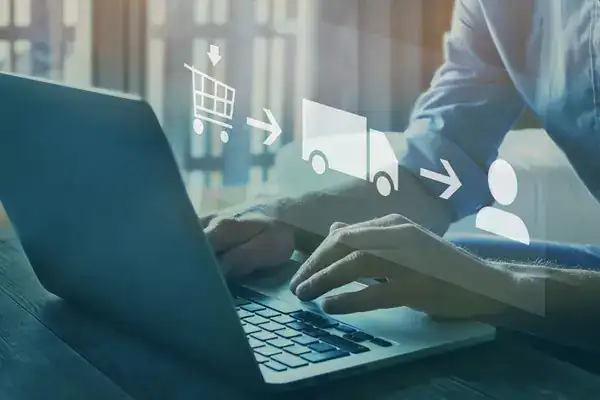
Create shopping baskets with the help of procurement tools and convert them into orders with a click
The user puts together their requirements in the shopping cart. After sending, the predefined approval workflow starts. After final approval, the procurement tool automatically converts the shopping cart into a legally valid order.
Automatic approval workflows and plausibility check
The system automatically checks whether the cost center’s budget is sufficient and whether all the necessary information for an order is available. The rule-based workflows forward the request to the right approvers.
Notifications on delivery status and clear document management
The online procurement software proactively informs the requester about the status of their order, from the supplier’s order confirmation to the announcement of delivery. All associated documents are stored centrally and clearly for the respective process.

User-friendliness of the procurement platform
User-friendliness (user experience) determines the success or failure of an e-procurement implementation. The platform must be designed in such a way that it can be used intuitively by all employees – even those without in-depth procurement expertise.
Clearly display delivery status, delivery times and process information
Good procurement portal software offers the user a transparent overview at all times. Similar to parcel tracking in the B2C sector, users can track the progress of their order.
Intuitive search and filter functions, clear hit lists
A powerful, error-tolerant search (similar to Google) helps the user to quickly find the desired product. Clear filters by manufacturer, price or product group make the selection easier.
Clear overviews and detailed illustrations with product images
An appealing visual presentation with product images, detailed descriptions and technical data sheets increases acceptance and avoids incorrect orders.
Cloud-based & mobile procurement solutions
The future of procurement lies in the cloud. Cloud-based procurement solutions offer a level of flexibility, scalability and cost efficiency that is almost impossible to achieve with traditional, locally installed (on-premise) systems. They enable access to the procurement platform from anywhere and at any time – a decisive advantage in a globalized and mobile working world.
Advantages of cloud-based procurement
- Lower initial investment: No expensive investment in your own server hardware is necessary.
- Fast implementation: The software is available immediately and can be implemented more quickly.
- Automatic updates: The provider takes care of maintenance, security and the provision of new functions.
- High scalability: The performance and number of users can be flexibly adapted to requirements.
- Global availability: All locations and employees worldwide access the same central platform.
Cloud Procurement Software & Unified Procurement Software
Modern cloud procurement software is often designed as “unified procurement software”. This means that it combines various procurement modules (e.g. supplier management, sourcing, contract management, operational procurement) on a single, integrated platform. This unified approach avoids isolated solutions and creates a consistent, digital process across the entire source-to-pay cycle.
Access from anywhere with mobile procurement software
The ability to access procurement processes while on the move is becoming increasingly important. Mobile procurement software enables managers to approve purchase requisitions on their smartphone or tablet while they are on a business trip. Service technicians can order spare parts directly from the construction site. This mobile access speeds up processes considerably and increases flexibility.
Data security and central platform management
Reputable providers of cloud solutions operate their platforms in highly secure, certified data centers and guarantee the highest standards of data security and data protection(GDPR compliance). Central management of the platform by the provider relieves the internal IT department and ensures that all security precautions are always up to date.
Industries & areas of application for procurement software
The need for efficient, digital procurement processes exists across all industries. While the basic requirements are often similar, there are specific challenges that flexible procurement software must address depending on the industry.
1. industry, trade and services
In the manufacturing industry, the focus is often on the procurement of raw materials and production materials (keyword: BOM software for the management of bills of materials). In retail, the primary focus is on the efficient ordering of merchandise and the optimization of stock levels. In service companies, the focus is often on the procurement of indirect materials (e.g. office supplies, IT equipment) and external services.
2. use of purchasing software in global supply chains
In global supply chains, the software’s ability to manage multiple currencies, languages and tax rates is essential. Multi-client capability for mapping different national companies is a must here.
3. application in the Software Industry Procurement Transformation
The software industry itself is also undergoing a transformation. The procurement of cloud services, licenses and external development services requires specialized contract and license management, which modern procurement software can support.
For whom is procurement software worthwhile?
The introduction of procurement software is generally worthwhile for any company that wants to professionalize its purchasing processes and reduce costs. However, the benefits are particularly great for:
Medium-sized and large companies with complex supply chains
The more suppliers, orders and locations a company has, the greater the efficiency gains through centralization and automation.
International corporations
The need to manage different legal entities (clients), currencies and languages makes a multi-client capable procurement solution indispensable.
Target group
The primary target group are the departments that are directly or indirectly involved in procurement: Purchasing and procurement departments, materials management and supply chain management. They all benefit from the increased efficiency and transparency offered by supplier management software.
The best procurement software solutions in comparison
The market for procurement software is diverse. It ranges from large, all-encompassing suites to specialized niche providers. The choice of the “best” solution always depends on the individual requirements of the company.
The leading providers include major international players such as SAP Ariba, Coupa or Ivalua, but also a large number of specialized, often medium-sized providers that stand out due to their particular flexibility, industry expertise or attractive price-performance ratio. A careful market analysis is the first step towards making the right decision.
Selection criteria for procurement software tools
In addition to the pure functions, the following aspects should also be evaluated during the selection process:
| Criterion | Description |
|---|---|
| User-friendliness (UI/UX) | How intuitive and easy is the operation for end users? |
| Integration capability (API) | How well can the software be integrated into our ERP system and other applications? |
| Flexibility & customizability | Can the software map our specific processes and workflows? |
| Scalability & future-proofing | Will the software grow with our requirements and is the provider investing in new technologies such as AI? |
| Support & partnership | Does the provider offer competent, German-speaking support and does it see itself as a long-term partner? |
Advantages of integrated procurement software solutions compared to individual solutions
An integrated solution that maps the entire source-to-pay process on one platform is generally preferable to individual solutions (best-of-breed) for sourcing or invoice verification only, for example. The advantage lies in the continuous data flow without interface problems, in a standardized user interface and in the avoidance of redundant data. Unified procurement software offers a holistic view of purchasing and thus enables more effective management.
Procurement Software Demo & Consulting
The best way to get to know a software is to see it live in action. Don’t hesitate to request a no-obligation demo.
Request a non-binding procurement software demo: Let us show you the software in a personal online presentation tailored to your specific requirements.
Test the functions of our procurement solutions live: Many providers offer the opportunity to try out the software yourself in a test environment.
Personal advice for your digital procurement tool: Benefit from the experience of the providers. In a personal consultation, you can describe your challenges and develop a suitable solution strategy together.
Contact & implementation support with Simmeth: At Simmeth, we see ourselves as your partner for digital transformation in procurement. We support you from the initial analysis and implementation through to ongoing operation and beyond.
Practical examples & success stories
Nothing is more convincing than the success of other companies. Ask for specific practical examples and case studies.
Simmeth Case Studies
We would be happy to show you how other companies in your industry have optimized their purchasing processes with our software.
Software Procurement Best Practices
Learn from the best. Success stories show how automated purchasing processes have achieved significant savings and increased efficiency.
Figures & KPIs
Concrete figures prove the success. How much have purchasing costs been reduced? By what percentage was the process throughput time reduced? Good e-procurement software provides the data to make these successes measurable.
The future of e-procurement systems: AI & Analytics
The development of e-procurement systems is not standing still. The future belongs to intelligent, data-driven procurement, in which artificial intelligence (AI) and advanced analysis methods play a central role.
AI algorithms analyze historical consumption data, recognize patterns and can thus predict future requirements. Based on these forecasts, AI procurement software can automatically suggest optimal order times and quantities, thus minimizing inventory costs.
In the source-to-pay process, AI can help select the right suppliers by evaluating not only price, but also risk factors, performance and sustainability aspects. Generative AI can even assist in the creation of draft contracts or communication with suppliers.
Modern analytics tools enable in-depth analysis of the data collected in the system. This allows potential savings to be uncovered, supplier performance to be compared and risks to be identified at an early stage.
Intelligent procurement savings tracking software goes beyond simply recording savings. It can help to analyze the causes of price deviations and forecast future spending trends to enable proactive management by the purchasing department.
FAQs: Frequently asked questions
Here you will find answers to frequently asked questions about supplier management software
What is the difference between e-procurement and a simple online store?
A simple online store is purely an ordering platform. E-procurement, on the other hand, is a holistic approach that digitizes the entire procurement process – from the requirement request to multi-stage approval workflows and the order through to invoice verification. It is about managing, controlling and automating the entire source-to-pay process, not just the ordering process.
Is procurement software also worthwhile for SMEs?
Yes, absolutely. Modern, cloud-based procurement software is scalable and therefore ideal for SMEs. It is precisely here, where efficiency and cost control are crucial, that such a solution is most beneficial. It professionalizes purchasing, reduces administrative effort and creates a transparency of expenditure that was otherwise reserved for large corporations.
What does "seamless ERP connection" mean and why is it so important?
A seamless ERP connection means that the procurement software communicates with your central ERP system (e.g. SAP) in real time. Data such as supplier master data, purchase orders or invoices are automatically synchronized. This is crucial in order to avoid data inconsistencies, eliminate manual double maintenance and create a “single source of truth”. Without this integration, the procurement solution remains an isolated silo and loses much of its efficiency potential
What is "Maverick Buying" and how does procurement software help against it?
Maverick buying refers to uncontrolled purchasing that bypasses official procurement channels and contracts. Employees order on their own initiative, often at less favorable conditions and without the necessary approvals. Procurement software prevents this by providing a central, user-friendly “web store” for all approved items and suppliers. Each purchase is channeled through standardized workflows, ensuring compliance with framework agreements and guaranteeing full cost control.
Can we also use the software to process free text orders?
Yes, in addition to ordering from predefined catalogs, modern procurement solutions also support free text orders. Employees can describe in detail a requirement that is not included in the catalog. These requirements then go through a special approval workflow in which the purchasing department can select the appropriate supplier and trigger the order. This maintains flexibility without losing control.
How time-consuming is it to maintain the catalog data in the software?
The effort is minimized by various mechanisms. Suppliers can enter and update their catalogs independently using standardized formats (e.g. BMEcat). In addition, PunchOut interfaces enable direct access to the suppliers’ online stores. The employee orders in the supplier’s usual store, but the shopping cart is transferred to the procurement software for approval and processing. This significantly reduces the internal maintenance effort.
What is the advantage of cloud-based procurement software over an on-premise solution?
A cloud-based solution offers decisive advantages: Lower initial investment (no expensive server hardware), faster implementation, automatic updates and global accessibility. It is flexibly scalable and grows with your company. It also eliminates the need for internal maintenance and operation of the IT infrastructure.
Does the software also support mobile procurement?
Yes, modern procurement solutions are optimized for mobile use. Approvers can conveniently check and approve purchase requisitions on the go via smartphone or tablet. This speeds up processes considerably, as approvals no longer get stuck just because a decision-maker is not at their desk.
How does the software ensure that budgets are adhered to?
Budgets can be stored in the software for cost centers, projects or employees. For each purchase requisition, the system checks in real time whether the available budget is sufficient. If an overrun is imminent, the approver is informed or the workflow escalates to a higher instance. This enables proactive budget control instead of experiencing nasty surprises at the end of the month.
Is procurement software only about cost savings?
No. While cost savings are an important and measurable advantage, the strategic benefits go far beyond this. It is about process reliability, transparency, risk minimization and relieving the purchasing department of administrative tasks. The time freed up in this way can be used by strategic purchasing to drive innovation, develop supplier relationships and make a sustainable value contribution for the entire company.
Now we would like to give you the answers to the most important questions about us and our solution:
What is Simmeth's SC manager?
ERP systems primarily map transactional processes such as orders or invoices. Topics such as supplier onboarding, risk management, compliance, evaluation or supplier development are usually only possible to a limited extent. The SC Manager supplements existing ERP systems at precisely this point and creates a central platform for all non-transactional supplier processes.
Why is the SC-Manager a useful addition to ERP systems?
ERP systems are primarily designed for processing transactions, such as orders, invoices or bookings. However, actual supplier management goes much further. It includes topics such as onboarding, qualification, risk assessment, compliance, supplier development and collaboration. These processes are usually mapped only rudimentarily or not at all in ERP and require specialized functions such as those offered by dedicated supplier management software.
What specific problems does the SC Manager solve?
The SC Manager solves typical challenges such as distributed supplier data, manual Excel maintenance, high onboarding costs and a lack of transparency regarding risks and compliance. All relevant information is brought together in a structured manner, processes are standardized and decisions can be made on the basis of reliable data.
How does the SC Manager support supplier onboarding?
With the SC-Manager, onboarding is digital and structured. Suppliers maintain their data themselves via a portal, upload documents and answer questionnaires. The SC-Manager automatically checks the completeness and consistency of the information and ensures that clean, usable supplier data is available right from the start.
What role does AI play in SC-Manager?
The SC Manager includes integrated AI support in the form of the SC Agent. The SC Agent collects information from internal and external sources, structures it and supports users with analysis and evaluation. For example, automated supplier profiles and risk reports are created in just a few minutes instead of hours of manual research.
What distinguishes the SC-Agent from classic analysis tools?
The SC-Agent is not an isolated tool, but is directly integrated into the SC-Manager. It works contextually with the existing supplier data, supplements it with external information and makes the results immediately usable. Users can also interact with their supplier database via chat and carry out targeted analyses without the need for reports or IT queries.
How does the SC Manager support risk management?
The SC Manager offers structured risk management with scorecards, traffic light systems and early warning mechanisms. The SC Agent supplements this assessment with automated AI risk reports that analyze external information and provide additional risk information. This creates a comprehensive, up-to-date risk profile for each supplier.
Is the SC-Manager suitable for LkSG, ESG and other EU requirements?
Yes, the SC Manager supports companies in fulfilling regulatory requirements such as LkSG or ESG. Self-disclosures, certificates, risk assessments and measures are centrally recorded, documented and stored in an audit-proof manner. Reports can be created in a comprehensible manner at any time.
How time-consuming is the introduction of the SC-Manager?
The SC-Manager is a SaaS solution and can be introduced step by step. Many companies start with a clearly defined use case such as onboarding or risk management. Existing systems such as ERP, PLM or QMS can be connected without the need for extensive IT projects.
For which companies is the SC-Manager particularly suitable?
SC-Manager is particularly suitable for companies with complex supply chains, many suppliers and high quality, risk and compliance requirements. Typical users are medium-sized and large companies in mechanical engineering, the automotive supply industry, medical technology and technology-intensive industries.
Would you like to find out more about Simmeth System and our SC-Manager solution? Contact our team directly: