



Efficient communication with the supplier portal
Advantages, functions & benefits:
A supplier portal facilitates onboarding, evaluation and collaboration with suppliers across the entire supplier lifecycle. This enables companies to increase their efficiency.
Supplier portal in the global supply chain
In a globalized economy where supply chains are becoming increasingly complex and prone to disruption, seamless and efficient collaboration with suppliers is no longer a luxury, but a key competitive factor.
Companies that are able to communicate quickly, transparently and in partnership with their supplier network can not only reduce costs and minimize risks, but also drive innovation and strengthen their own resilience.
But how can such cooperation be implemented in practice when you are working with hundreds or even thousands of suppliers worldwide?
The answer lies in the digitalization and centralization of supplier communication – and this is exactly where the supplier portal comes into play.
Take 3 minutes to watch our video
What is a supplier portal?
LIFECYCLE MANAGEMENT
A supplier portal is a specialized software solution that offers companies a central, digital interface for managing and controlling their entire supplier relationships.
In contrast to a pure bidder portal, which focuses primarily on the tendering process (e-sourcing), a supplier portal covers the entire lifecycle of a supplier (supplier lifecycle management).
It enables the centralized management of supplier master data, often starting with a supplier self-assessment, the automation of onboarding and qualification processes, the secure exchange of documents such as certificates and contracts, and the continuous monitoring of performance and compliance.
A practical example: A mechanical engineering company that works with over 1,000 global suppliers uses a supplier portal to automate the annual prequalification process, classify suppliers based on their performance and track key performance indicators (KPIs) such as on-time delivery or the complaint rate in near real time.
CENTRAL COMMUNICATION
A supplier portal, also known as a supplier portal or procurement portal, is much more than just a digital repository for documents.
It is a centralized, web-based platform that serves as a single interface for B2B communication for all communication and interaction between a company and its suppliers.
Think of it as an exclusive B2B network in which all relevant information, processes and tasks are bundled and standardized. From initial contact and prequalification to daily order processing and strategic supplier development – the supplier portal creates a uniform and transparent basis for collaboration.
DIGITAL HUB
The strategic importance of a supplier portal for purchasing and the entire supply chain management is immense.
It is the technological basis for the digitalization and automation of procurement processes and creates the necessary transparency to make informed, data-based decisions. The standardization of processes such as supplier registration and classification not only increases efficiency, but also ensures that compliance requirements are met.
A modern supplier portal is also not an isolated system. It can be seamlessly integrated into the existing IT landscape via interfaces (APIs), for example into an SAP system or other ERP solutions, making it the central data hub for all supplier-related information. It forms the foundation for successful supplier development and partnership-based cooperation, which is essential in volatile markets.
Read more about supplier development in our blog.
Supplier portal: advantages for companies
The introduction of a supplier portal brings with it a multitude of benefits that have a direct impact on the efficiency, costs and strategic orientation of purchasing. But what exactly does such a portal do in practice? A supplier portal is designed to fundamentally simplify and professionalize collaboration between companies and suppliers.
The core services include:
Instead of laboriously exchanging important information and documents by email, all relevant data is provided centrally and in a structured form on the platform. This avoids misunderstandings and ensures that everyone involved has the same level of information at all times.
By automating routine tasks such as data entry, document checking or order processing, manual sources of error are minimized and valuable resources are freed up in purchasing. Employees can concentrate on strategic tasks instead of dealing with administrative work.
All supplier-related data - from master data, certificates and contracts to the entire communication history - is bundled in a digital supplier file. This 360-degree view enables fast and well-founded decision-making.
Effective use of supplier management tools
A modern supplier management portal unfolds its full potential when it is used as a strategic tool for managing the entire supplier base. The central functions go far beyond pure data management and actively support the three core tasks of supplier management.
Important functions of supplier portals
| Function | Function Description | Benefits Supplier portal |
|---|---|---|
| Order and order management | Handling of the entire order process from order request to order confirmation and invoice | Acceleration of processes, reduction of throughput times, error-free processing |
| Document management | Secure upload, centralized management and automatic monitoring of documents such as certificates, contracts or proof of compliance | Expiry of deadlines, reduction of administrative effort |
| Real-time data and reporting | Provision of dashboards and reports with up-to-date key figures on supplier performance, risk assessment and compliance status. | Transparent basis for decision-making, early identification of risks, continuous monitoring of supplier performance. |
What 3 tasks does a supplier portal perform?
A modern supplier management portal unfolds its full potential when it is used as a strategic tool for managing the entire supplier base. The central functions go far beyond pure data management and actively support the three core tasks of supplier management.
Central management of suppliers: The portal serves as a “single source of truth” for all supplier master data. It standardizes the onboarding process, ensures that all necessary information and documents are available and enables a systematic classification of suppliers according to strategic relevance, risk or product group.
Order and invoice processing: The portal digitizes and automates the entire procure-to-pay process. Suppliers can view orders directly in the portal, send order confirmations, announce shipping notifications and upload invoices. This creates transparency and speeds up processing considerably.
Performance and compliance monitoring: By continuously recording performance data (e.g. delivery reliability, quality) and monitoring compliance requirements (e.g. valid certificates, adherence to codes of conduct), the portal enables proactive supplier management. Companies can identify risks at an early stage and systematically develop the performance of their suppliers.
How supplier portal software optimizes purchasing
The implementation of a supplier portal is not just a technological upgrade, but a paradigm shift for purchasing. It transforms operational procurement processes and creates the basis for strategic, value-oriented supplier management.
Time and cost savings
The automation of manual activities and the acceleration of communication and approval processes result in significant time and cost savings. The administrative effort per supplier is reduced, while process reliability increases.
Transparency and control
A supplier portal creates unprecedented transparency across the entire supplier base. All interactions are documented, performance data can be accessed at any time and compliance risks become visible at an early stage. Purchasing gains full control over its supplier relationships.
Improved ROI through digital tools
By combining a supplier portal with other digital tools such as e-sourcing platforms or supplier collaboration tools, the return on investment (ROI) is maximized. Purchasing can negotiate better conditions, leverage innovation potential with suppliers and take collaboration to a new, partnership-based level.
Best practices for the use of supplier portals
The introduction of a supplier portal is only the first step. To get the maximum benefit from the investment, companies must follow established best practices.
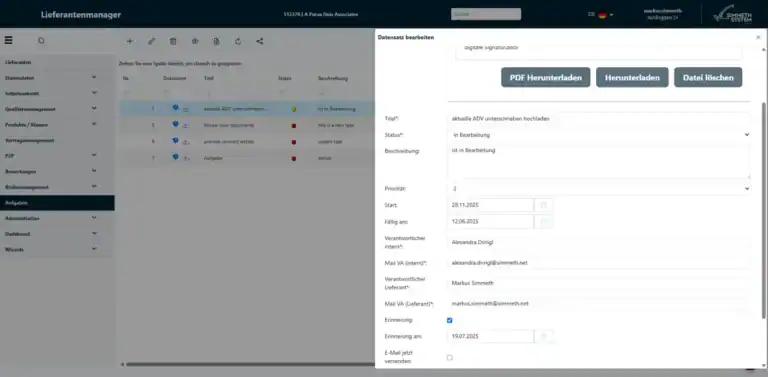
Regular maintenance and updating of data:
A portal depends on up-to-date and correct data. Companies should define clear processes and responsibilities for data maintenance and also actively require their suppliers to keep their information up to date.

Communication and feedback with suppliers:
A portal is not a one-way street. Successful companies actively use the portal to enter into dialog with their suppliers, obtain feedback and work together on improvements. Regular performance evaluations and feedback discussions are a key success factor.
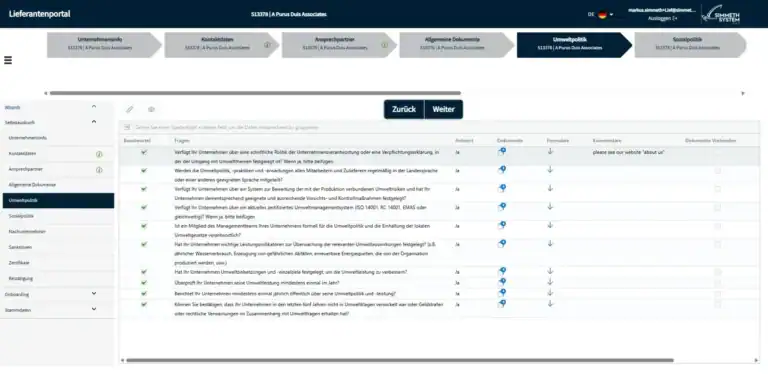
Supplier portal online
The availability of the portal as an online solution (cloud-based) is now standard. It enables collaboration regardless of location and time and ensures that suppliers in other time zones can also easily access the platform.
Supplier portal provider: Choosing the right partner
Choosing the right supplier portal software provider is a strategic decision that has far-reaching consequences. The market offers a wide range of solutions that differ considerably in terms of functionality, technology and price model.
Criteria for selecting the best supplier portal provider
When evaluating providers, companies should consider a number of criteria in order to find the most suitable solution for them:
User friendliness (user experience)
An intuitive and easy-to-use interface is crucial for acceptance by your own employees and suppliers
Integration capability (API)
The software must integrate seamlessly into the existing IT landscape (e.g. SAP, Oracle) to ensure a smooth data flow.
Scalability
The solution should be able to grow with the company, both in terms of the number of users and suppliers as well as the range of functions.
Security and GDPR compliance
The solution should be able to grow with the company, both in terms of the number of users and suppliers as well as the range of functions.
Cloud vs. on-premise
The decision between a cloud solution(SaaS) and an on-premise installation depends on the company’s individual IT strategies and security requirements.
Advantages and disadvantages of supplier portal software solutions

The decision between an open source solution and commercial enterprise software depends on the available resources and the desired level of support. While open source solutions offer a high degree of flexibility, they generally require in-depth in-house IT expertise. Enterprise solutions from specialized providers, on the other hand, offer comprehensive support, regular updates and a high level of reliability. Some providers have specialized in certain industries and offer preconfigured solutions that are tailored to the specific needs of the automotive industry or retail, for example.
Conclusion: Why a supplier portal is indispensable
In today’s networked and fast-moving business world, a supplier portal is no longer an option, but a necessity for companies that want to make their supply chains resilient, efficient and future-proof. It is the digital backbone for a modern and collaborative partnership with suppliers.
Summary of advantages and functionality
A supplier portal centralizes communication, automates processes and creates a transparent database for strategic decisions. It enables structured collaboration across the entire supplier ecosystem and lays the foundation for continuous improvement in quality, costs and performance.
Implementation: Tips for the supplier portal
The introduction of a supplier portal should be strategic and gradual, following best change management practices:
1. start with a clear focus:
Start with a clearly defined use case, such as the digitalization of supplier onboarding or the automation of supplier evaluation.
2. choosing the right partner
Carry out a careful cost-benefit analysis and choose a provider that not only fits your company technologically, but also culturally.
3. introduction in stages
Roll out the portal step by step and measure success using clearly defined key performance indicators (KPIs) such as the reduction in onboarding time, the increase in data quality or the return on investment (ROI).
Simmeth SC-Manager: Your supplier portal
The SC-Manager from Simmeth System is more than just a supplier portal. It is a comprehensive, modular software solution for the entire supply chain management. With the SC-Manager you benefit from:
1. ONBOARDONG
Automate and standardize the entire process from registration to approval of new suppliers.
- Registration form integrated on your website
- Workflow-controlled self-disclosure
- General and material-related questionnaires
- Document upload and download
- Self-administration of questionnaires for your key users
- Transparent checklists for purchasing
- Automatic notification of all process participants
- Release workflow for the vendor master
2. collaboration
Centralized communication & process control: Bundle all communication in one place and control all supplier-related processes via intelligent, rule-based workflows.
- Inquiries and tenders
- Order and confirmation process
- Transport documents
- Complaints
- Invoice transfer
3. DEVELOPMENT
Integrated measures and an audit management system for planning and managing your supplier audits enable methodical supplier development.
- Create, prioritize, schedule, distribute and process tasks
- Internal and external responsibilities
- Planning audits and filing audit reports
- Measures linked to audits
- Status reports and reminder emails ensure transparency and better adherence to deadlines
FAQs: Frequently asked questions
Here you will find answers to frequently asked questions about the supplier portal:
What is the main difference between a supplier portal and simple e-mail communication?
The main difference lies in the structure, centralization and traceability. While emails are unstructured and decentralized, a supplier portal bundles all communication and documents in one central location. Every process, from order confirmation to certificate verification, is standardized and fully documented. This creates transparency, avoids errors and makes collaboration traceable and audit-proof.
Is a supplier portal only suitable for large corporations with thousands of suppliers?
No, absolutely not. Modern, cloud-based supplier portals are scalable and are also ideal for medium-sized companies. The benefits – increased efficiency, transparency and risk minimization – are relevant for companies of all sizes. Especially in SMEs, where resources are often scarcer, automation through a portal helps to relieve and professionalize purchasing.
How time-consuming is the introduction of a supplier portal?
The effort required depends on the complexity of the processes to be mapped. A proven approach is a step-by-step approach. You start with a clearly defined process, such as digital supplier onboarding. Modern SaaS solutions (Software-as-a-Service) can often be implemented within a few weeks, as no complex local installation is required.
How do I convince my suppliers to use the portal?
Supplier acceptance is crucial. The key is to clearly communicate the benefits for suppliers: They receive a transparent overview of all orders, can view the status of invoices at any time and maintain their master data independently. A simple, intuitive user interface and good support during onboarding (e.g. through training or instructions) are also essential.
Can a supplier portal be connected to our existing ERP system (e.g. SAP)?
Yes, this is one of the core functions of modern supplier portals. The portal is seamlessly integrated into the existing IT landscape via standardized interfaces (APIs). This ensures automatic data exchange between the portal and the ERP system, which avoids duplicate data maintenance and ensures consistent information across all systems.
What costs are associated with a supplier portal?
The costs vary depending on the provider and model. Cloud solutions (SaaS) generally incur a one-off set-up fee and monthly or annual license fees, which are often based on the number of users or connected suppliers. With on-premise solutions, the initial investment costs for licenses and hardware are higher, but there are no ongoing rental costs.
How secure is my data and that of my suppliers in a cloud portal?
Reputable providers of cloud-based supplier portals place the highest value on data security. The data is hosted in highly secure, certified data centers (often in Germany or the EU) and is protected by state-of-the-art encryption technologies. When making your selection, make sure that the provider guarantees compliance with the GDPR and has the relevant certifications (e.g. ISO 27001).
What is the difference between a supplier portal and an e-procurement platform?
A supplier portal focuses on the entire relationship and collaboration with the supplier (supplier relationship management), from onboarding to performance evaluation and development. An e-procurement platform, on the other hand, concentrates primarily on the operational ordering process, i.e. the processing of purchase requisitions and orders. A modern supplier portal often integrates e-procurement functions.
Can we also use a supplier portal to evaluate our suppliers?
The main benefits are time savings, better data quality and reduced risks. Companies often report significantly shorter onboarding times, less manual research, more transparent decisions and greater compliance security. These effects can be measured using key figures such as process duration, effort per supplier or number of critical risks.
What return on investment (ROI) can I expect from a supplier portal?
The ROI is made up of several factors. Direct cost savings result from the reduction in manual effort, paper and postage costs. Indirect savings result from faster processes, the avoidance of errors, better negotiating positions thanks to transparent data and the reduction of delivery risks. Many companies achieve a positive ROI within the first 12 to 18 months.
Now we would like to give you the answers to the most important questions about Simmeth System and our solution:
What is Simmeth's SC manager?
Yes, supplier evaluation is a central function. The portal continuously collects performance data such as delivery reliability, quality (e.g. complaint rates) and compliance. This quantitative data can be supplemented by qualitative assessments from the specialist departments. The result is an objective and transparent 360-degree view of the performance of each supplier.
Why is the SC-Manager a useful addition to ERP systems?
ERP systems are primarily designed for processing transactions, such as orders, invoices or bookings. However, actual supplier management goes much further. It includes topics such as onboarding, qualification, risk assessment, compliance, supplier development and collaboration. These processes are usually mapped only rudimentarily or not at all in ERP and require specialized functions such as those offered by dedicated supplier management software.
What specific problems does the SC Manager solve?
The SC Manager solves typical challenges such as distributed supplier data, manual Excel maintenance, high onboarding costs and a lack of transparency regarding risks and compliance. All relevant information is brought together in a structured manner, processes are standardized and decisions can be made on the basis of reliable data.
How does the SC Manager support supplier onboarding?
With the SC-Manager, onboarding is digital and structured. Suppliers maintain their data themselves via a portal, upload documents and answer questionnaires. The SC-Manager automatically checks the completeness and consistency of the information and ensures that clean, usable supplier data is available right from the start.
What role does AI play in SC-Manager?
The SC Manager includes integrated AI support in the form of the SC Agent. The SC Agent collects information from internal and external sources, structures it and supports users with analysis and evaluation. For example, automated supplier profiles and risk reports are created in just a few minutes instead of hours of manual research.
What distinguishes the SC-Agent from classic analysis tools?
The SC-Agent is not an isolated tool, but is directly integrated into the SC-Manager. It works contextually with the existing supplier data, supplements it with external information and makes the results immediately usable. Users can also interact with their supplier database via chat and carry out targeted analyses without the need for reports or IT queries.
How does the SC Manager support risk management?
The SC Manager offers structured risk management with scorecards, traffic light systems and early warning mechanisms. The SC Agent supplements this assessment with automated AI risk reports that analyze external information and provide additional risk information. This creates a comprehensive, up-to-date risk profile for each supplier.
Is the SC-Manager suitable for LkSG, ESG and other EU requirements?
Yes, the SC Manager supports companies in fulfilling regulatory requirements such as LkSG or ESG. Self-disclosures, certificates, risk assessments and measures are centrally recorded, documented and stored in an audit-proof manner. Reports can be created in a comprehensible manner at any time.
How time-consuming is the introduction of the SC-Manager?
The SC-Manager is a SaaS solution and can be introduced step by step. Many companies start with a clearly defined use case such as onboarding or risk management. Existing systems such as ERP, PLM or QMS can be connected without the need for extensive IT projects.
For which companies is the SC-Manager particularly suitable?
SC-Manager is particularly suitable for companies with complex supply chains, many suppliers and high quality, risk and compliance requirements. Typical users are medium-sized and large companies in mechanical engineering, the automotive supply industry, medical technology and technology-intensive industries.
Would you like to find out more about Simmeth System and our SC-Manager solution? Contact our team directly: