

Software for supplier management
Efficient, transparent, intelligent:
Our supplier management software offers you a central platform in the form of a digital hub for managing all supplier processes with the benefit-oriented use of artificial intelligence.
Supplier Lifecycle Management
Starting with onboarding and qualification, our SaaS solution provides support with classification and product group management, collaboration with e-procurement to supplier evaluationrisk management and the methodical development of supplier relationships throughout the entire supplier lifecycle.
It not only makes it possible to manage and monitor supplier data and documents in a structured manner, but also to identify risks at an early stage while effortlessly meeting legal requirements.
The modularity of our supplier management solution enables you to implement precisely the processes and functionalities that offer your company maximum benefit.
Thanks to cloud-based technology and AI-supported automation, you can optimize your purchasing processes sustainably, laying the foundation for efficient supplier management. supplier management with greater quality, compliance and strategic success throughout the entire purchasing process.
Take 3 minutes to watch our video
ADVANTAGES OF A CLOUD-BASED SUPPLIER MANAGEMENT SYSTEM
A cloud-based vendor management system offers numerous advantages that support both operational efficiency and strategic purchasing objectives. The most important advantages are
All supplier data and documents, such as certificates and contracts, as well as all articles, evaluations and transaction data are available in one structured location so that they can be accessed at any time and from anywhere.
Thanks to real-time process monitoring using traffic light systems and reminders, you always have an overview of your processes, while the supplier status, risk analyses and meaningful key performance indicators (KPIs) provide more control and enable well-founded decisions.
Recurring processes such as onboarding, risk analyses or supplier evaluations are simplified by rule-based workflows and intuitive user guidance, increasing efficiency and reducing potential sources of error.
Compliance with regulations, for example in accordance with the LkSG or relevant ISO standards, is actively supported so that risks such as supply bottlenecks or quality problems can be identified at an early stage and managed effectively.
By promoting consistent communication and structured collaboration, you strengthen relationships with your strategic partners and improve your negotiating position across the entire supplier lifecycle - from onboarding to supplier development.
Cloud solutions grow with your company - whether international rollout or integration of additional modules, cloud-based systems remain adaptable, future-proof and guarantee protection against unauthorized access and data loss.
CENTRAL FUNCTIONS OF OUR SUPPLIER MANAGEMENT SOFTWARE
Professional vendor management software, such as SC-Manager, covers all tasks in the various phases of the supplier lifecycle – from onboarding, collaboration and supplier evaluation to risk management and supplier development.
This is controlled via central master data management and comprehensive reporting.
The following functions enable holistic, digital and scalable control of all supplier processes – for more efficiency, risk transparency and quality in purchasing and the entire supply chain management.

Control center with 360 degree overview
- Central platform for controlling and monitoring all supplier processes,
- Holistic view of data, documents, communication and compliance
- Consistent transparency across the entire supplier lifecycle
- Traffic light systems for status display and automatic deadline monitoring

Central hub in the supply chain
- Collects and processes information on the entire supply chain
- Interfaces to ERP and DMS systems
- Connection of websites, risk and compliance tools
- Standard connections to catalogs and stores

Document management
- any document types (e.g. contracts, certificates),
- Variable document assignment (e.g. suppliers, articles, product groups)
- Versioning, archiving, historization
- Automatic document recognition (OCR), integrated digital signature

Process management and workflows
- Rule-based, automated step-by-step workflows
- Control via traffic light systems, alarms and reminder functions
- Role and rights-based distribution of tasks
- Flexible, customizable processes adapt to your business processes
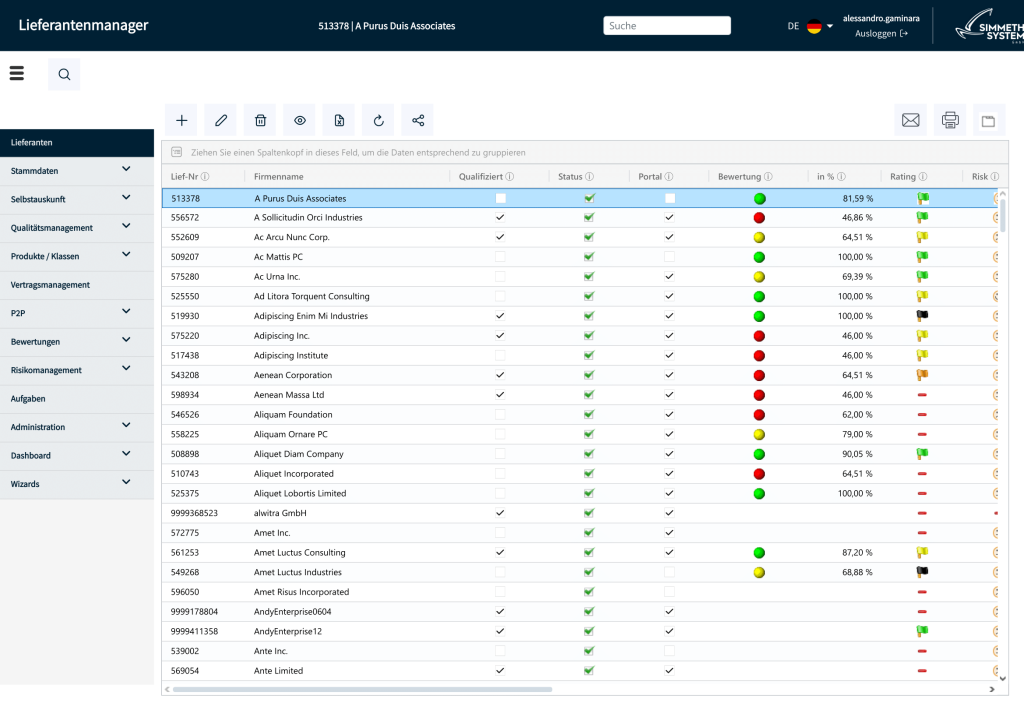
Digital supplier file
- Central collection point for all information on a supplier
- Multi-level, rights-controlled tab structure, clear flexible organization
- Convenient functions for filtering, grouping, sorting and searching
- Intuitive data visualization incl. status displays

Centralized control of supplier communication
- Simple, direct communication and information in the supply chain
- Based on individual supplier accounts, workflows, roles and rights
- Transparent self-service portal, customizable questionnaires
- Standard processes across the entire supplier lifecycle
Dashboards, reports & KPI monitoring
- Central collection point for all information on a supplier
- Multi-level, rights-controlled tab structure, clear flexible organization
- Convenient functions for filtering, grouping, sorting and searching
- Intuitive data visualization incl. status displays

Administration and configuration
- Individual configuration by key users without external IT
- Management of e-mails, threshold values, questionnaires, workflows
- Scorecard and KPI management incl. weightings and criteria
- Management of user groups and authorizations via drag & drop
MANUAL VS. SOFTWARE: SUPPLIER MANAGEMENT IN COMPARISON
While manual supplier management quickly reaches its limits with increasing data volumes, software-supported supplier management offers a scalable, secure and automated solution. It improves transparency, efficiency and decision-making quality – and thus forms the basis for modern, strategic supplier relationship management:
| Criterion | Manual supplier management | Supplier management software |
|---|---|---|
| Data maintenance | Decentralized Excel spreadsheets, confusing folder structures and distributed filing systems | Centralized, structured data management with AI-supported, searchable supplier file |
| Document management | Manual filing, time-consuming, no reminders | Integrated DMS with versioning, deadline monitoring & digital signature |
| Transparency & overview | Individually created overviews, dependency on individuals | 360° view of all data, processes and risks in real time |
| Processes & workflows | Often uncoordinated, paper-based, undocumented | Automated, rule-based workflows with clear process management |
| Collaboration & communication | Email chaos, lack of traceability | Centralized, automated communication, documented & structured |
| Compliance & audit security | Risk of violations, complex obligations to provide evidence | Integrated compliance management, auditable documentation |
| Risk management | Reactive, difficult to analyze, mostly stand-alone | Proactive risk analyses & early warning systems |
| KPI, evaluations & reporting | Time-consuming, error-prone, individually created ad hoc | Automated reports, real-time dashboards, KPIs |
| Scalability & growth | Difficult to scale, growing effort | Scalable at will, modular extensions possible, constant further development |
| User & rights management | Restricted, often only password-protected files | Secure roles and rights management |
PRACTICAL EXAMPLES AND USE OF SUPPLIER MANAGEMENT SOFTWARE
The best way to understand the practical benefits and effectiveness of supplier management, or vendor management software, is to look at successful implementations in practice. Simmeth System provides a series of best practices and success stories that show how companies from a wide range of industries have successfully introduced and used SC-Manager.
Find out, for example, how Verkehrsbetriebe Zürich (VBZ) optimized its supply chain management with SC-Manager, how EKK Plus (purchasing association of municipal clinics) implemented an innovative supplier management and information system or how Regionetz successfully expanded its purchasing management system. The introduction of the SCM portal at ÖBB Technische Services also offers an exciting insight into the digitalization of complex supplier processes. Another example is the storage size management system at MAN Energy Solutions, which shows how specific production processes can be designed efficiently and transparently. You can find these and other examples at News.

As a public transport operator, VBZ is part of the Swiss public transport system and is therefore subject to the guidelines of the Federal Office of Transport (FOT), which monitors and regulates public transport in Switzerland. VBZ was faced with the challenge of modernizing and optimizing its supply chain management.

Based on the “SC-Manager” software solution from software provider Simmeth System GmbH, EKK plus has created a central platform with the “LiMiS” supplier management and information system, which efficiently combines supplier management, knowledge management, member and supplier communication in an app-based portal solution.
Regionetz GmbH, one of the leading network operators in the Aachen region, relies on innovative digitalization solutions in purchasing. With the modular SC-Manager, the company optimizes processes, promotes transparency and ensures precise supplier evaluation
BEST PRACTICE: INTRODUCING SUPPLIER MANAGEMENT SOFTWARE
For the successful introduction of supplier management software – SRM software – such as SC-Manager, Simmeth relies on a structured, step-by-step approach that takes both technical and organizational aspects into account. The focus is on a process-oriented and modular introduction: the software is implemented according to the processes in place at the respective company and in manageable stages, which reduces complexity and enables rapid success.
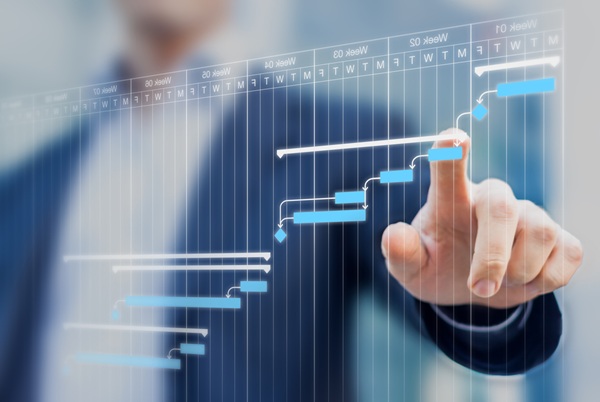
Methodical project management for the implementation of SRM software
Right at the start of the project, a detailed specification is drawn up in collaboration with the specialist departments of the implementing company, taking into account the entire supply chain. This specification is based on templates that have been tried and tested over many years and are continuously developed further, so that it serves as the basis for the configuration of the software – including the workflows, data structures and user interfaces – and can be implemented precisely in line with the previously defined processes and requirements.
Parallel project planning has proved particularly successful: the defined processes are already mapped in the test environment during the concept phase and can be tested and verified while the specifications are being drawn up. This not only saves considerable time in project planning, but also ensures that the design is practice-oriented and realistic.
Intensive training and change management is carried out in parallel to the technical implementation, with key users being involved at an early stage through simultaneous project planning and trained during test operation to ensure a smooth transition. In addition, accompanying learning materials support the transfer of knowledge so that other user groups can also be effectively trained as part of the rollout.
A decisive success factor is the early definition of relevant KPIs, which are mapped in the system via scorecards and dashboards, so that targeted performance measurement is possible. Here too, our customers can draw on a best-practice selection based on our decades of experience, which enables transparent performance measurement and continuous optimization of processes. Thanks to the flexible architecture and methodical approach, a customized solution is created – without individual programming, but with maximum accuracy of fit. The result: lean projects, low costs and a high level of user acceptance.
SELECTION CRITERIA FOR A SUPPLIER MANAGEMENT TOOL
The SC-Manager from Simmeth System is clearly positioned as the central information, communication and procurement platform for your supply chain management with a particular focus on purchasing, supplier management across the entire supplier lifecycle, risk & compliance and Key figures & reporting.
Its tried-and-tested structure, high level of customizability and comprehensive process support in particular clearly set it apart from many of its competitors – ideal for companies that want to combine supply chain excellence with supplier relationship management, maximum transparency and control.
Compare our SC-Manager with solutions from our competitors.
SC-Manager vs. competitors: an overview of the comparison
| Criterion | SC Manager from Simmeth | Typical competitor |
|---|---|---|
| Focus & target group | Clear specialization in purchasing & SCM, particularly suitable for medium-sized companies | Often generic solutions for large corporations or broad functional landscapes |
| Modularity & flexibility | Highly modular, individually configurable, customization by key users themselves possible | Mostly standardized, extensions often only possible through providers |
| Technical architecture | Browser-based platform, ISO 27001-certified German data center, TÜV-IT tested | Varies - often proprietary environments, not always GDPR-compliant |
| Interfaces & integrations | Standard APIs to SAP, MS Dynamics, ProAlpha, catalogs, IntegrityNext, Creditsafe, Ecovadis, OCR, Microsoft, Fragile State Index, etc. | ERP connections often only via additional modules for a fee |
| Document management | Versioning, archiving, reminder functions, traffic light system, digital signature, OCR, supplier and article-related | In some cases, only manual filing or separate DMS required |
| Process control & workflows | Rule-based, workflow wizard, visually supported, alarms & reminders, own administration | Workflows often rudimentary or not visually supported |
| Supplier portal | Interactive, role-based, with flexible questionnaires, document upload, self-service, action management | Portals often not fully integrated, rigid layout, limited functions |
| Dashboards & KPI analysis | Drill-down capable dashboards, weighted scorecards, real-time KPIs, integrated reporting | Separate BI solutions often necessary |
| Supplier evaluation | Fully integrated, combination of hard & soft facts, customizable scorecards, ESG & compliance integrated | Mostly standardized assessment without flexible risk weighting |
| Risk & Compliance Management | LkSG-compliant, weighted risk scorecards, automatic alerts, external and internal data sources, flexible risk dashboards integrated | Compliance mostly external additional tools, only external data, not deeply integrated, no linking of internal data |
| Administration | Full self-administration: questionnaires, scorecards, e-mail templates, rights, risk factors, processes | Customization often only by provider or IT support |
| Usability & introduction | Intuitive, role-based, can be used immediately, German-language support, fast rollout | Introduction usually takes longer, training & customizing often necessary |
| Additional functions | Product group management, contract management, audit manager, KPI monitor, complaints, article & master data manager and much more. | Many of these functions are only available via separate modules or third-party providers |
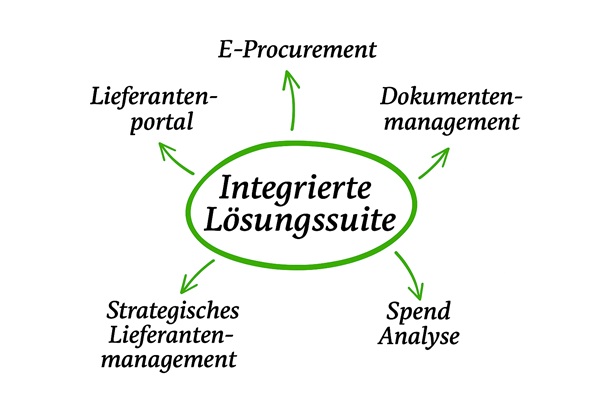
Special strengths of the SC-Manager
- Information, control center and communication hub for strategic and operational purchasing
- Seamlessly links all relevant internal and external information in your supply chain
- Controls communication and processes with your suppliers across the entire supplier lifecycle
- Combines strategic supplier management and operational e-procurement in one central tool
- Software made in Germany, hosted in Germany and supported in Germany
FUTURE TRENDS IN SUPPLIER MANAGEMENT SOFTWARE
The requirements for modern supplier management are developing rapidly – driven by technological innovations, increasing regulatory requirements and ever more complex supply chains. The SC-Manager from Simmeth System is not only up to date, but is already equipped for the future. The focus is on the use of artificial intelligence: an integrated chatbot supports users in operating the software, AI algorithms not only automatically analyze Internet sources to obtain information, but also integrate the information directly into the supplier file. AI supports the optimization of master data and risk-based assessments.

At the same time, the SC Manager acts as a digital supply chain hub: it uses its flexible API interface to link internal company data with external information – for example from ESG, risk and compliance platforms.
This allows requirements from the LkSG, the CSDDD or the EUDR to be integrated seamlessly and automatically. Sustainability and legal compliance are thus proactively supported. Strategic and operational worlds are also moving closer together: Catalog data is automatically recorded and integrated directly into operational procurement via the web store.
In short: with SC-Manager, companies are relying on a future-proof solution that not only keeps pace with technological developments and regulatory requirements – but is one step ahead of them.
No matter how the market, legislation or digital infrastructure changes: SC-Manager remains your reliable control center for modern supplier management to optimize your supply chain.
FAQs: Frequently asked questions
Here you will find answers to frequently asked questions about supplier management software
What is supplier management software?
Supplier management software helps companies to centrally manage all information, processes and evaluations relating to their suppliers. It bundles master data, documents, evaluations, risks and communication processes in one system. The aim is to create transparency, standardize processes and make collaboration with suppliers efficient and traceable.
Why is an ERP system often not enough for supplier management?
ERP systems are primarily designed for processing transactions, such as orders, invoices or bookings. However, actual supplier management goes much further. It includes topics such as onboarding, qualification, risk assessment, compliance, supplier development and collaboration. These processes are usually mapped only rudimentarily or not at all in ERP and require specialized functions such as those offered by dedicated supplier management software.
What typical problems does supplier management software solve?
Many companies struggle with scattered information, manual effort and a lack of transparency. Supplier data is available in Excel lists, emails or different systems, which causes errors, duplication of work and delays. Supplier management software brings this information together, ensures structured processes and makes risks, gaps and the need for action visible at an early stage.
How does supplier management software support the onboarding of new suppliers?
With digital onboarding, suppliers are guided through all the necessary steps in a structured manner. They maintain their data themselves in a portal, upload documents and answer questionnaires. The system automatically checks the completeness and consistency of the information. This makes onboarding significantly faster, more transparent and less error-prone than manual processes using Excel and email.
What role does artificial intelligence play in supplier management?
Artificial intelligence primarily takes over time-consuming tasks that were previously carried out manually. These include, for example, researching company information, analyzing external data or identifying risks and anomalies. In SC-Manager, the SC-Agent supports users in automatically creating supplier profiles and risk reports and evaluating data via chat, without complex reports or IT queries.
How does supplier management software help with risk management?
Supplier management software creates transparency regarding financial, operational, regulatory and ESG risks. Risks are systematically recorded, evaluated and continuously monitored. Scorecards, traffic light systems and early warning messages help to identify potential problems at an early stage and initiate appropriate measures before delivery failures or compliance violations occur.
Is supplier management software relevant for LkSG, ESG and other EU requirements?
Yes, it is often a key prerequisite for efficiently fulfilling regulatory requirements. Supplier management software supports the structured recording of self-disclosures, certificates and evidence, documents risks and measures in an audit-proof manner and facilitates reporting. This makes it much easier and more comprehensible to implement requirements such as the Supply Chain Due Diligence Act or ESG reporting obligations.
How costly is the introduction of supplier management software?
Modern supplier management solutions are designed as SaaS systems and can be introduced step by step. Many companies start with a pilot project or a clearly defined use case, such as onboarding or risk management. The IT outlay is low, as no local installation is required and existing systems such as ERP can be connected.
How can the benefits of supplier management software be measured?
The main benefits are time savings, better data quality and reduced risks. Companies often report significantly shorter onboarding times, less manual research, more transparent decisions and greater compliance security. These effects can be measured using key figures such as process duration, effort per supplier or number of critical risks.
For which companies is supplier management software particularly worthwhile?
Supplier management software is particularly worthwhile for companies with many suppliers, complex or international supply chains and high quality, risk and compliance requirements. It is an important building block for stable, transparent and future-proof supply chains, particularly in mechanical engineering, the automotive supply industry, medical technology and technology-intensive sectors.
Now we would like to give you the answers to the most important questions about us and our solution:
What is Simmeth's SC manager?
ERP systems primarily map transactional processes such as orders or invoices. Topics such as supplier onboarding, risk management, compliance, evaluation or supplier development are usually only possible to a limited extent. The SC Manager supplements existing ERP systems at precisely this point and creates a central platform for all non-transactional supplier processes.
Why is the SC-Manager a useful addition to ERP systems?
ERP systems are primarily designed for processing transactions, such as orders, invoices or bookings. However, actual supplier management goes much further. It includes topics such as onboarding, qualification, risk assessment, compliance, supplier development and collaboration. These processes are usually mapped only rudimentarily or not at all in ERP and require specialized functions such as those offered by dedicated supplier management software.
What specific problems does the SC Manager solve?
The SC Manager solves typical challenges such as distributed supplier data, manual Excel maintenance, high onboarding costs and a lack of transparency regarding risks and compliance. All relevant information is brought together in a structured manner, processes are standardized and decisions can be made on the basis of reliable data.
How does the SC Manager support supplier onboarding?
With the SC-Manager, onboarding is digital and structured. Suppliers maintain their data themselves via a portal, upload documents and answer questionnaires. The SC-Manager automatically checks the completeness and consistency of the information and ensures that clean, usable supplier data is available right from the start.
What role does AI play in SC-Manager?
The SC Manager includes integrated AI support in the form of the SC Agent. The SC Agent collects information from internal and external sources, structures it and supports users with analysis and evaluation. For example, automated supplier profiles and risk reports are created in just a few minutes instead of hours of manual research.
What distinguishes the SC-Agent from classic analysis tools?
The SC-Agent is not an isolated tool, but is directly integrated into the SC-Manager. It works contextually with the existing supplier data, supplements it with external information and makes the results immediately usable. Users can also interact with their supplier database via chat and carry out targeted analyses without the need for reports or IT queries.
How does the SC Manager support risk management?
The SC Manager offers structured risk management with scorecards, traffic light systems and early warning mechanisms. The SC Agent supplements this assessment with automated AI risk reports that analyze external information and provide additional risk information. This creates a comprehensive, up-to-date risk profile for each supplier.
Is the SC-Manager suitable for LkSG, ESG and other EU requirements?
Yes, the SC Manager supports companies in fulfilling regulatory requirements such as LkSG or ESG. Self-disclosures, certificates, risk assessments and measures are centrally recorded, documented and stored in an audit-proof manner. Reports can be created in a comprehensible manner at any time.
How time-consuming is the introduction of the SC-Manager?
The SC-Manager is a SaaS solution and can be introduced step by step. Many companies start with a clearly defined use case such as onboarding or risk management. Existing systems such as ERP, PLM or QMS can be connected without the need for extensive IT projects.
For which companies is the SC-Manager particularly suitable?
SC-Manager is particularly suitable for companies with complex supply chains, many suppliers and high quality, risk and compliance requirements. Typical users are medium-sized and large companies in mechanical engineering, the automotive supply industry, medical technology and technology-intensive industries.
Would you like to find out more about Simmeth System and our SC-Manager solution? Contact our team directly: