

With objective supplier evaluation to strategic partnerships
Our supplier evaluation software turns data into decisions. Combine hard facts, soft facts and external risk data with AI support to create a dynamic scorecard for a transparent and high-performance supplier base.
What is supplier evaluation software?
Supplier evaluation software is a central tool in strategic purchasingthat systematizes and automates the process of evaluating and comparing suppliers. It is used to objectively measure and transparently present the performance, reliability and compliance of suppliers based on defined criteria. Essentially, the aim is to replace subjective “gut feelings” with a sound, data-supported basis for making strategic decisions in supplier management.
Modern systems go far beyond the mere collection of performance data. They integrate various data sources – from internal ERP data (hard facts) and qualitative assessments from specialist departments (soft facts) to external risk information – and consolidate these into a meaningful 360° supplier scorecard. This scorecard is at the heart of the evaluation and serves as a central basis for decision-making for the entire supplier lifecycle – from the selection to the development and phase-out of a supplier.
The importance for strategic purchasing
Supplier evaluation software is indispensable for strategic purchasing. It creates the necessary transparency to:
- Proactively manage risks: weak points in the supply chain are identified at an early stage.
- Optimize costs: The overall performance (total cost of ownership) becomes visible, not just the price.
- to ensure quality: Compliance with quality standards is systematically monitored.
- Promote innovation: strong partners can be identified and integrated into the company’s own development.
- to achieve sustainability goals: ESG criteria (environmental, social, governance) become measurable and comparable.
The centerpiece: the dynamic 360° scorecard
The core of our solution is the dynamic 360°supplier scorecard. It is far more than a static table; it is a living, breathing system that bundles all relevant information about a supplier and condenses it into a single, easy-to-understand key figure. The 360° approach means that we include all conceivable perspectives on a supplier in order to obtain a complete and objective picture.
The scorecard is made up of three main data sources:
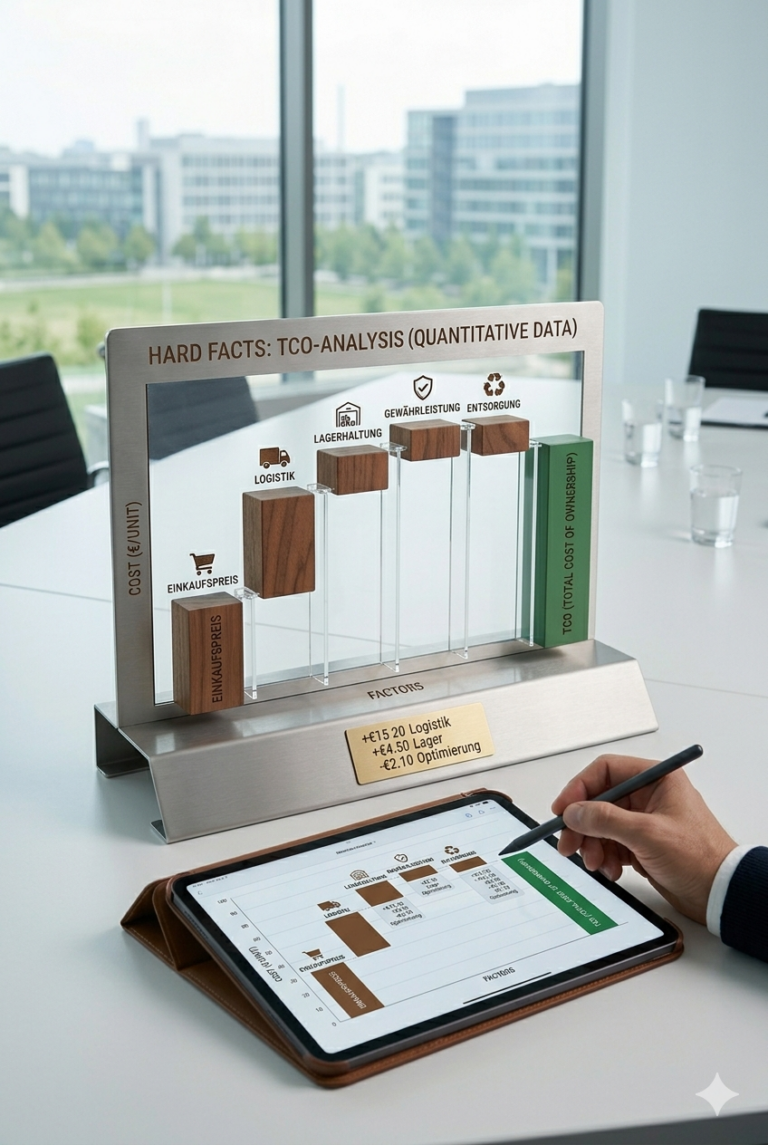
Hard facts (quantitative performance data)
These are the measurable, indisputable facts that come directly from your ERP system or other upstream systems. These include key figures such as
Delivery reliability (deadline & quantity)
Was the delivery on time and in the quantity ordered?
Quality indicators
How high is the complaint rate or the number of defective parts (PPM)?
Price development
How has the price developed compared to the market or previous periods?
Terms of payment
What discounts or payment terms are granted?

Soft facts (qualitative assessments)
This data captures the subjective but equally important assessment of collaboration from the perspective of your internal stakeholders. Easy-to-use online questionnaires are used to gather opinions from various specialist areas:
Purchasing
How does the responsible buyer rate the communication and willingness to negotiate?
Quality assurance
How cooperative is the supplier in the event of audits or complaints?
Production/Logistics
How flexibly does the supplier
respond to changes in demand?
Development
How innovative is the supplier and how much support does it provide for new developments?
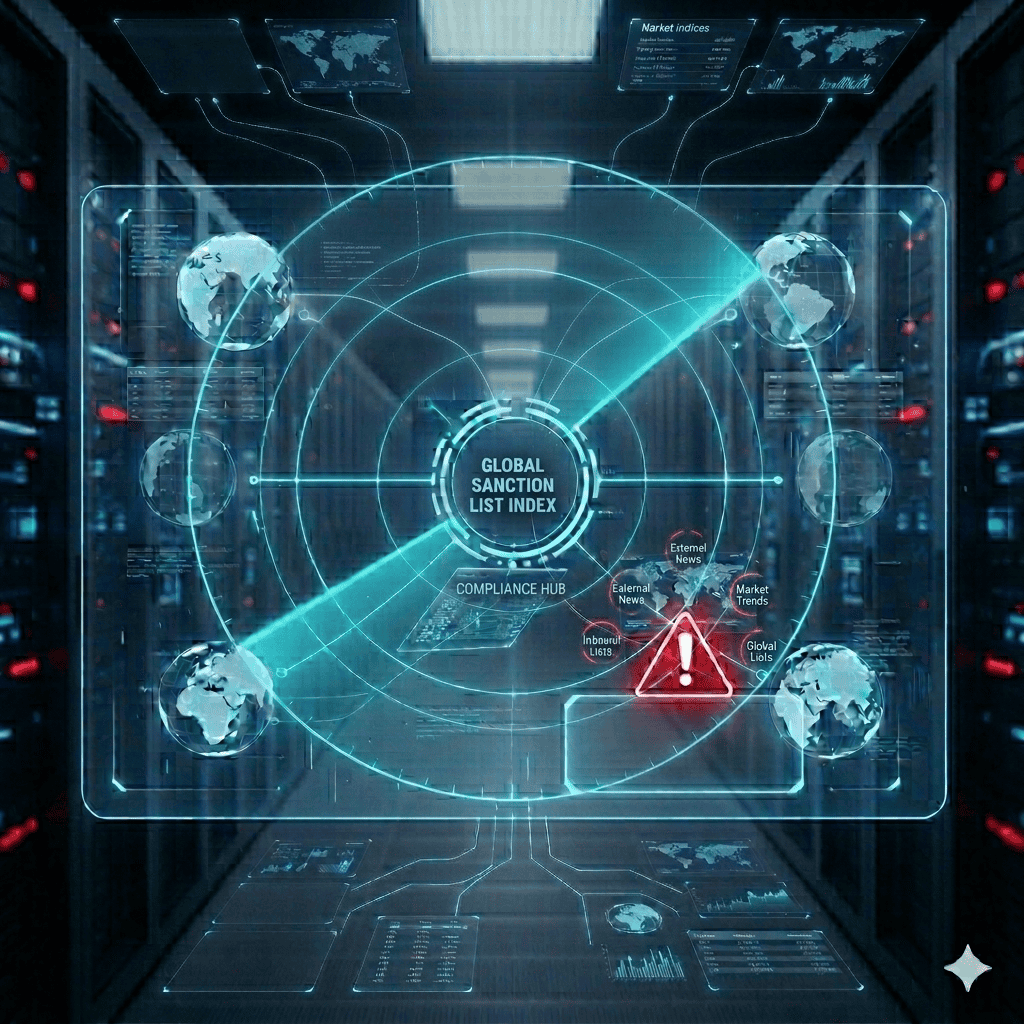
External risk data (objective market information)
This is the level at which our AI comes into its own. The SC Risk Agent continuously scans thousands of external sources to collect objective risk information and integrate it directly into the scorecard. More on this in the next chapter.
All of these criteria can be individually weighted to adapt the scorecard of your supplier evaluation software precisely to your corporate strategy. The result is a tailor-made, meaningful and always up-to-date basis for decision-making.
The SC-Risk-Agent: Intelligent automation for your valuation
While hard facts and soft facts represent the internal view, the SC Risk Agent provides the decisive, objective view from the outside. This AI component is seamlessly integrated into the supplier assessment software and automatically enriches your scorecard with external, valid risk data. Instead of your employees spending hours on manual research, the AI delivers the information in a matter of seconds – structured, evaluated and directly in the context of the respective supplier.
The SC Risk Agent analyzes seven key risk dimensions:
| Risk dimension | Description of risk | Typical data sources |
|---|---|---|
| 1. financial risk | How stable is the supplier's financial situation? Is there a threat of insolvency? | Credit reports (e.g. Creditsafe), business reports, financial news |
| 2. operational risk | Are there production stoppages, strikes or logistical problems? | Trade press, company news, trade registers |
| 3. geopolitical risk | Is the supplier affected by political unrest, wars or trade embargoes? | News agencies, government reports, NGO analyses |
| 4. compliance risk | Are there any violations of laws, corruption or antitrust violations? | Sanction lists, court databases, official announcements |
| 5 ESG risk | Are there any negative reports on environmental pollution, human rights violations or poor corporate governance? | Sustainability ratings (e.g. EcoVadis), NGO reports, media analyses |
| 6. cyber risk | How well is the supplier protected against cyberattacks ? Have there been any data leaks? | IT security blogs, darknet analyses, corporate IT reports |
| 7. reputation risk | What is the public image of the supplier? Is there any negative press or social media campaigns? | Social media, press articles, rating portals |
This AI-supported analysis transforms supplier evaluation from a reactive, past-oriented process into a proactive, predictive early warning system. You not only see how a supplier has performed in the past, but also what risks are imminent in the future.
From assessment to action: measures and development
A good evaluation is only half the battle. The true value of supplier evaluation software lies in deriving concrete measures from the findings and actively developing the supplier base. Our solution supports you in this with integrated action management.
Automated action management
Based on the results of the scorecard, tasks and measures can be defined and assigned directly in the system. A simple traffic light system ensures transparency:
Green
The supplier exceeds expectations. Potential for a strategic partnership can be examined here.
Yellow
The supplier meets expectations but has weaknesses in certain areas. Specific improvement targets can be agreed (e.g. “Increase delivery reliability by 5% in the next quarter”).
Red
The supplier falls considerably short of expectations. This triggers an escalation process. Possible measures range from a clarifying discussion to a formal audit to the initiation of phase-out.
Each task is assigned responsibilities, deadlines and a status. Automatic notifications ensure that no task is forgotten. This creates a closed loop that ensures continuous improvement.
Basis for strategic supplier development
The results of the supplier evaluation are the perfect basis for strategic supplier development. Instead of relying on guesswork, you can decide which suppliers to invest in based on hard data. The supplier evaluation software helps you to classificate your suppliers:
Strategic partners
Suppliers with consistently excellent ratings that are critical to our own business success. This is where cooperation is intensified.
Standard suppliers
Reliable suppliers for non-critical goods. The focus here is on efficiency and process automation.
Risk suppliers
Suppliers with fluctuating or poor performance. Development plans must be drawn up or alternatives sought.
This ensures that your resources are deployed in a targeted manner where they will bring the greatest strategic benefit.
Reporting and dashboards: transparency at the touch of a button
All the data collected would be worthless without a clear and understandable presentation. Our supplier evaluation software therefore offers powerful reporting functions and intuitive dashboards that give you a complete overview at all times.
Management dashboards
Managers receive a condensed overview of the performance of the entire supplier base, the greatest risks and the most important KPIs.
Buyer dashboards
Every buyer can see at a glance the ratings of their assigned suppliers, the status of pending measures and upcoming tasks.
Supplier cockpit
About the supplier portal you can provide your suppliers with their own cockpit. There they can see their own evaluation (compared to anonymized peers), respond to feedback and check the status of measures. This transparency promotes partnership-based cooperation and motivates suppliers to take the initiative.
Drill-down functions
You can navigate from each key figure in the scorecard to the level of individual documents, survey responses or risk reports with a single click. This means that every assessment remains comprehensible and transparent.
Drill-down functions
All ratings are historicized so that you can track the development of a supplier over time. Has it improved or deteriorated? Are the measures taken effective?
These comprehensive reporting options make supplier evaluation a vital management tool for the entire purchasing department.
FAQs: Frequently asked questions
What is the difference between hard facts and soft facts in supplier evaluation?
Hard facts are quantitative, measurable data that come directly from your systems (e.g. delivery reliability, complaint rate). Soft facts are qualitative, subjective assessments by employees on aspects such as communication, service or innovative ability. Good supplier evaluation software combines both in order to obtain a complete picture.
How does the supplier evaluation software ensure that the evaluations are objective?
The software ensures objectivity by using a standardized catalog of criteria and a weighted scorecard . The integration of external, AI-researched risk data by the SC-Risk agent reduces the dependency on purely subjective opinions and creates a broader, more valid database.
Can we define our own evaluation criteria?
Yes, absolutely. The platform is highly flexible. Not only can you adjust the weighting of the standard criteria, you can also create your own criteria, questionnaires and scorecards for different product groups or company divisions. This ensures that the evaluation fits your strategy exactly.
How complex is the integration of the supplier evaluation software with our ERP system?
Modern supplier evaluation software offers standardized interfaces to common ERP systems such as SAP. The effort required for the connection is therefore manageable. The aim is to establish an automated data flow for the hard facts in order to eliminate manual effort.
How are suppliers involved in the evaluation process?
Ideally, integration takes place via a supplier portal. There, suppliers can view their own performance, respond to evaluations, take part in surveys and track the status of agreed measures. This transparency promotes a partnership of equals.
What is the advantage of AI integration through the SC Risk Agent?
The main advantage is the time saved and the expanded database. Instead of employees spending hours manually searching for risks, AI does this in seconds. It also covers risk dimensions (e.g. geopolitical risks, cyber risks) that are often difficult to keep track of in purchasing. The result is a faster, more comprehensive and more proactive risk assessment.
Does the supplier evaluation software also support compliance with laws such as the LkSG?
Yes, by systematically recording, assessing and documenting risks relating to human rights and environmental standards (ESG), the software provides the necessary transparency and traceability to meet the requirements of the German Supply Chain Due Diligence Act (LkSG). Action management also helps with the implementation of preventive and corrective measures.
How often should a supplier evaluation be carried out?
This depends on the strategic importance of the supplier. Strategic A suppliers should be evaluated continuously or at least quarterly. For B and C suppliers , an annual or semi-annual evaluation is often sufficient. Good software makes it possible to manage these cycles flexibly and automatically.
Doesn't supplier evaluation lead to pure price competition?
No, on the contrary. A holistic 360° evaluation prevents exactly that. By placing criteria such as quality, risk, innovation and sustainability on an equal footing with price, it promotes the selection of the most economical supplier, not necessarily the cheapest. It is all about the total cost of ownership (TCO).
How does the supplier evaluation software help me with supplier development?
The software is the perfect tool for data-supported supplier development. The detailed results of the scorecard show exactly where a supplier has strengths and where it has weaknesses. On this basis, you can create targeted development plans , define measures and measure their success over time. This turns suppliers into real strategic partners.
Now we would like to give you the answers to the most important questions about Simmeth System and our solution:
What is Simmeth's SC manager?
Yes, supplier evaluation is a central function. The portal continuously collects performance data such as delivery reliability, quality (e.g. complaint rates) and compliance. This quantitative data can be supplemented by qualitative assessments from the specialist departments. The result is an objective and transparent 360-degree view of the performance of each supplier.
Why is the SC-Manager a useful addition to ERP systems?
ERP systems are primarily designed for processing transactions, such as orders, invoices or bookings. However, actual supplier management goes much further. It includes topics such as onboarding, qualification, risk assessment, compliance, supplier development and collaboration. These processes are usually mapped only rudimentarily or not at all in ERP and require specialized functions such as those offered by dedicated supplier management software.
What specific problems does the SC Manager solve?
The SC Manager solves typical challenges such as distributed supplier data, manual Excel maintenance, high onboarding costs and a lack of transparency regarding risks and compliance. All relevant information is brought together in a structured manner, processes are standardized and decisions can be made on the basis of reliable data.
How does the SC Manager support supplier onboarding?
With the SC-Manager, onboarding is digital and structured. Suppliers maintain their data themselves via a portal, upload documents and answer questionnaires. The SC-Manager automatically checks the completeness and consistency of the information and ensures that clean, usable supplier data is available right from the start.
What role does AI play in SC-Manager?
The SC Manager includes integrated AI support in the form of the SC Agent. The SC Agent collects information from internal and external sources, structures it and supports users with analysis and evaluation. For example, automated supplier profiles and risk reports are created in just a few minutes instead of hours of manual research.
What distinguishes the SC-Agent from classic analysis tools?
The SC-Agent is not an isolated tool, but is directly integrated into the SC-Manager. It works contextually with the existing supplier data, supplements it with external information and makes the results immediately usable. Users can also interact with their supplier database via chat and carry out targeted analyses without the need for reports or IT queries.
How does the SC Manager support risk management?
The SC Manager offers structured risk management with scorecards, traffic light systems and early warning mechanisms. The SC Agent supplements this assessment with automated AI risk reports that analyze external information and provide additional risk information. This creates a comprehensive, up-to-date risk profile for each supplier.
Is the SC-Manager suitable for LkSG, ESG and other EU requirements?
Yes, the SC Manager supports companies in fulfilling regulatory requirements such as LkSG or ESG. Self-disclosures, certificates, risk assessments and measures are centrally recorded, documented and stored in an audit-proof manner. Reports can be created in a comprehensible manner at any time.
How time-consuming is the introduction of the SC-Manager?
The SC-Manager is a SaaS solution and can be introduced step by step. Many companies start with a clearly defined use case such as onboarding or risk management. Existing systems such as ERP, PLM or QMS can be connected without the need for extensive IT projects.
For which companies is the SC-Manager particularly suitable?
SC-Manager is particularly suitable for companies with complex supply chains, many suppliers and high quality, risk and compliance requirements. Typical users are medium-sized and large companies in mechanical engineering, the automotive supply industry, medical technology and technology-intensive industries.
Would you like to find out more about Simmeth System and our SC-Manager solution? Contact our team directly: