

ERP, Excel, email—supplier data everywhere, but no clear overview.
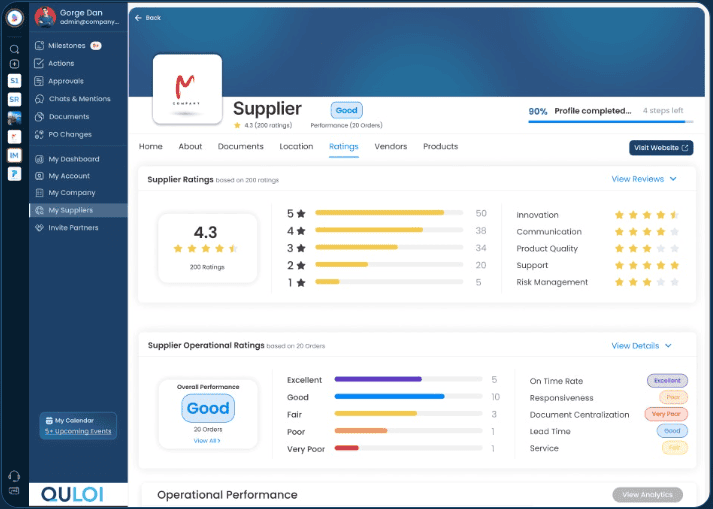
Our AI-powered SC Manager brings everything together—into a 360° supplier profile.
Master data, certificates, risks, and assessments from ERP systems, Excel, and email inboxes—all in one central location. With AI that thinks for itself.
Does this sound familiar?
Data Chaos
“Supplier data is scattered across Excel, ERP systems, and emails—no one has the full picture.”
OUR SOLUTION
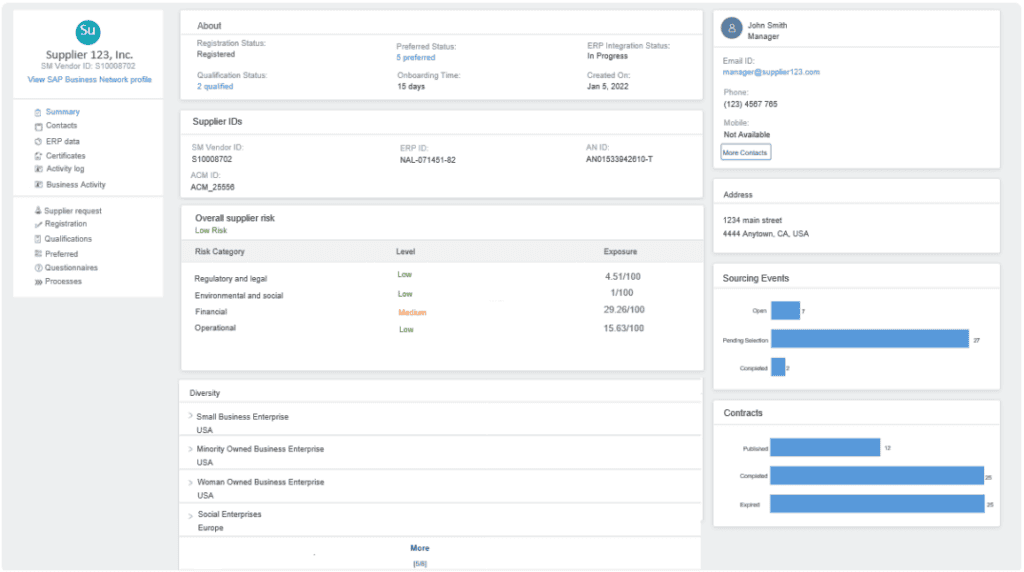
The SC Manager consolidates all supplier data into a central 360° supplier file—master data, certificates, evaluations, and communications—all in one place.
Compliance Pressure
“LkSG, CSDDD, ESG reporting—the requirements are growing faster than my team.”
OUR SOLUTION
Our AI-powered Risk & Compliance Scorecard automates LkSG, REACH, and ESG compliance documentation and generates insightful reports at the click of a button.
Blind Spots
“We don’t find out about supplier risks until a shipment fails to arrive.”
OUR SOLUTION
AI-powered real-time risk dashboards, Google Alerts, and the Fragile State Index provide early warnings—ensuring smooth operations before a risk turns into a production disruption.
Contract Management
“Contracts are scattered across different folders, time periods, and mailboxes—making it impossible to see at a glance which contracts are active, expiring, or missing.”
OUR SOLUTION
SC-Manager’s integrated document management system centrally consolidates all contracts and certificates in the supplier file—with automatic deadline tracking, version control, and a reminder function.
In a volatile world, manual processes are your biggest risk.
Our SC manager brings it all together.
An Overview of Our Modules
supplier development—with integrated AI support during critical phases.
ONBOARDING
Benefits for You
Qualify new suppliers faster—without manual follow-ups and paperwork chaos.
AI
AI supports the creation and automatic enrichment of supplier profiles—including online research.
A seamless process from self-registration through self-disclosure to becoming a qualified supplier.
- Registration form integrated on your website
- Workflow-Driven Self-Reporting via the Supplier Portal
- General and material-related questionnaires
- Document upload and download
- Self-administration of questionnaires for your key users
- Transparent checklists for purchasing
- Automatic notifications to all parties involved in the process
- Release workflow for inclusion in the vendor master data
Classification
Benefits for You
Strategic Clarity: Know at all times which suppliers are truly important.
AI
AI-powered algorithms automatically link internal data with external sources and market information.
The SC Manager classifies your suppliers according to your strategic needs and links them to external sources.
- Linking internal and external classes
- Key figures as hard facts per classification criterion
- Soft Facts: Performance, Market Position, Strategic Importance
- Assignment of Standard Strategies
- Detailed dashboards for classifications and KPIs
- Product group management with KPIs and dashboards
Collaboration
Benefits for You
Less email chaos—structured collaboration with suppliers on a single platform.
Workflow-driven information and communication flow in your day-to-day collaboration with your suppliers via the SC Supplier Portal.
- Inquiries and tenders
- Order and confirmation process
- Transport documents
- Complaints
- Invoice transfer
Supplier evaluation
Benefits for You
Objective performance data instead of gut feelings—for better purchasing decisions.
AI
AI-powered data analysis: Ask about your evaluation data directly via chat—without having to create reports manually.
Methodical assessment of your suppliers’ performance using a weighted scorecard.
- "Hard facts" from document data
- "Soft facts" about surveys with web-based questionnaires
- Variable Scorecards for Divisions and Product Categories
- Detailed results dashboards and reports
- Integrated action management
- Self-configurable scorecard, questionnaires and surveys
Risk & Compliance
Benefits for You
LkSG, REACH, ESG – Compliance requirements become manageable rather than overwhelming.
AI
AI aggregates internal and external data sources, analyzes them in a structured manner, and consolidates them into audit-ready risk scorecards at the push of a button.
The Risk & Compliance Scorecard combines internal and external information into a comprehensive 360° risk and compliance management system.
- Flexible Risk & Compliance Scorecard
- Sustainability management (LkSG, EU regulations)
- Supplier and Product Compliance (REACH, CBAM)
- Financial Risk
- Google Alerts, Fragile State Index
- Risk dashboards, reporting and alerts
Supplier development
Benefits for You
Systematically resolve supplier issues—before they disrupt production.
Integrated measures and an audit management system for planning and managing your supplier audits enable methodical supplier development.
- Create, prioritize, schedule, and assign tasks
- Internal and External Responsibilities
- Planning audits and filing audit reports
- Measures linked to audits
- Status indicators and reminder emails for transparency and meeting deadlines
The SC Manager AI Agent
No more complex reports. Simply ask the AI agent for all relevant supply chain and supplier information via chat.
TALK TO YOUR DATABASE
“What were the last 10 complaints in the ‘Cables’ product category?”
“Which suppliers have an elevated country risk according to the Fragile State Index?”
“Show all suppliers without a valid LkSG document.”
Automated Risk Analysis
AI-Powered Onboarding
AI supports the creation and automatic enrichment of supplier profiles—including web searches and document recognition (OCR).
100%
24/7
FAQs: Frequently asked questions
Here you will find answers to frequently asked questions about digitalization in supply chain management, supplier management and supplier lifecycle management
Our supply chain is currently stable - why should we bother with it anyway?
Many supply chains appear stable as long as nothing happens. However, the greatest risks often arise where they are not visible – for example with subcontractors, outdated master data or missing evidence. Modern supply chains are becoming more complex due to regulation, geopolitical developments and increasing transparency requirements. Those who deal with structure and transparency at an early stage prevent subsequent disruptions instead of simply reacting to them.
Are Excel and our ERP system not enough?
ERP systems and Excel are important tools, but quickly reach their limits in supplier management. They are not designed to map risks, compliance, evaluations or external information in a structured way. Information is scattered, difficult to keep up to date and hardly linked. This makes control more difficult and increases manual effort – often unnoticed.
Where do unrecognized risks arise in the supply chain today?
Many risks arise outside the direct view: missing certificates, compliance violations, financial problems of suppliers or geopolitical dependencies. Without a centralized view of supplier information, these risks often remain undetected for a long time. Visibility is the prerequisite for being able to assess risks at all.
Is digitalization in supply chain management really necessary or just a trend?
Digitization is no longer an optional extra in supply chain management and especially in supplier management, but a prerequisite for controllability. With increasing demands for transparency, documentation and speed, manual processes can hardly be controlled reliably. For the first time, digital platforms make it possible to link information, standardize processes and make well-founded decisions.
What role does artificial intelligence play in supplier lifecycle management?
Artificial intelligence primarily takes over time-consuming tasks that were previously carried out manually. These include, for example, researching company information, analyzing external data or identifying risks and anomalies. In SC-Manager, the SC-Agent supports users in automatically creating supplier profiles and risk reports and evaluating data via chat, without complex reports or IT queries.
Doesn't digital supplier management mean additional work?
In the short term, every change seems like additional work. In practice, however, it turns out that most of the effort already exists today – in the form of manual research, coordination by email, Excel maintenance and rework. Digital solutions reduce this hidden effort and create long-term relief for purchasing, quality and management.
Is supplier lifecycle management software relevant for LkSG, ESG and other EU requirements?
Yes, it is often a key prerequisite for efficiently fulfilling regulatory requirements. Software supports supplier lifecycle management in the structured recording of self-disclosures, certificates and evidence, documents risks and measures in an audit-proof manner and facilitates reporting. This makes it much easier and more comprehensible to implement requirements such as the Supply Chain Due Diligence Act or ESG reporting obligations.
Now we would like to give you the answers to the most important questions about us and our solution:
How does Simmeth help to make risks visible that we don't even see today?
Simmeth creates transparency by combining internal supplier data with external information. Instead of looking at individual data points in isolation, an overall picture of suppliers, risks and dependencies along the supply chain is created. This makes risks visible before they become apparent in day-to-day business.
What makes Simmeth different from Excel or our ERP system?
Simmeth does not replace Excel or ERP, but connects information and processes that are mapped separately or not at all. While ERP systems manage transactions, Simmeth provides structure, transparency and controllability in supplier management – across all phases of the supplier lifecycle.
Does the deployment of Simmeth mean additional work for our teams?
On the contrary: Simmeth starts exactly where most of the manual work is done today. Thanks to clear processes, centralized information and automated evaluations, work is reduced, not shifted. Teams gain time for value-adding tasks instead of searching for data or maintaining lists.
How does Simmeth support companies in dealing with increasing complexity?
Simmeth brings structure to complex supply chains by standardizing, linking and making information centrally available. This enables companies to continue to manage their supplier base securely and transparently, even in the event of growth, internationalization or new regulatory requirements.
Why is Simmeth a long-term basis for stable supply chain management?
Simmeth is not designed as a short-term stand-alone solution, but as a platform for sustainable management. It grows with requirements, integrates new sources of information and supports companies in continuously developing their supply chain – instead of just reacting to problems.
Would you like to find out more about Simmeth System and our SC-Manager solution? Contact our team directly:
Ready for the next step?
Let us show you in a personal meeting how SC-Manager can revolutionize your supplier lifecycle and give you back control of your supply chain.